Our Approach
PTSD affects the whole person. Treatment should too.
Comprehensive Model
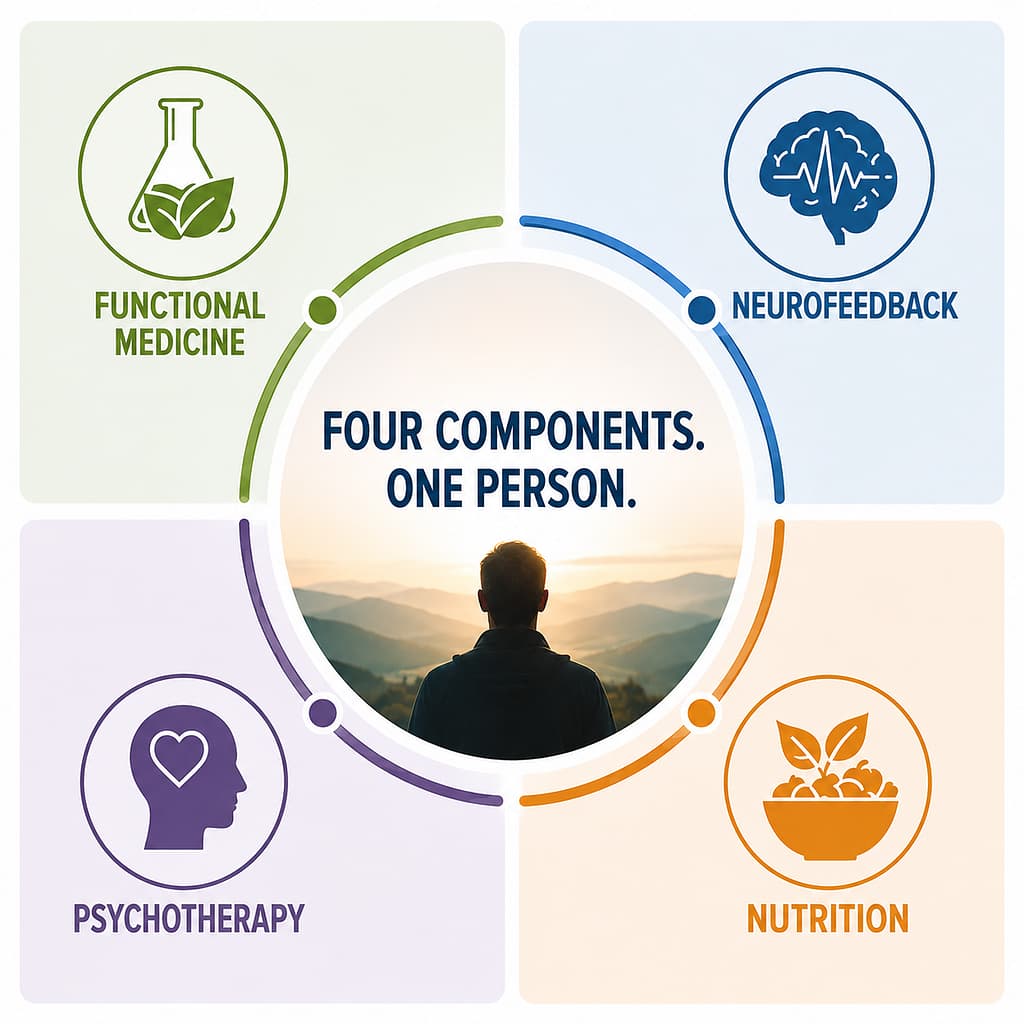
Our goal is to stop asking our heroes to fit into one treatment protocol, and begin building treatment protocols around the person. None of these components exist in isolation, and neither does PTSD.
Functional Medicine
Looking Beyond the Symptoms
PTSD has traditionally been approached primarily through psychological symptoms. But research has also identified physiological differences associated with PTSD, including changes involving metabolism, inflammation, mitochondrial function, energy utilization, nutrient absorption, the gut microbiome, and other biochemical processes. Functional medicine allows us to ask a different question: What is happening inside this person’s body that may be affecting their ability to heal? Through comprehensive medical evaluation and laboratory testing, providers can look for physiological imbalances and deficiencies that may be contributing to symptoms. Treatment can then be individualized based on what is actually happening within that person’s body rather than relying solely on symptoms. Because when the brain and body do not have what they need to function well, healing can become much more difficult.
The goal is not to replace mental health treatment. It is to address the physical health of the person alongside the psychological effects of trauma.
Psychotherapy
The Right Therapy for the Right Person
Trauma is personal. Trauma therapy should be too. There is no single psychotherapy modality that will be the best choice for every veteran or first responder. Their experiences, symptoms, histories, strengths, and readiness for trauma work are different, and their treatment should reflect those differences.
Rather than requiring every participant to follow the same psychotherapy protocol, clinicians will select the appropriate trauma-informed and evidence-based or evidence-informed approaches according to the needs of the individual. For some, treatment may focus on how traumatic experiences have shaped thoughts and beliefs; whereas, others may need help processing traumatic memories, regulating emotions, understanding different parts of themselves, or gradually engaging with experiences they have avoided.
Our commitment isn’t to one therapy. Our commitment is to finding the right therapeutic approach for the person sitting in front of us.
Neurofeedback
Helping the Brain Learn to Regulate Itself
Someone with PTSD can logically understand that they are safe while their nervous system continues responding as though danger is still present.
That disconnect can contribute to hypervigilance, anxiety, sleep difficulties, emotional reactivity, exhaustion, and the feeling of always being “on.” Neurofeedback gives us a way to work directly with this piece of the healing process. Neurofeedback is a non-invasive technology that monitors brain activity and provides the brain with moment-to-moment information about its own patterns. Rather than forcing the brain into a predetermined state, the feedback supports the brain’s natural ability to recognize patterns, adapt, and self-regulate. During a session, small sensors are placed on the scalp and ears while the participant simply relaxes and listens to music. Nothing is electrically stimulated or transmitted into the brain.
We aren’t trying to tell the brain what to do. We are giving it information so it can become better at doing what it was designed to do, which is adapt.
Nutrition
Giving the Body What It Needs to Keep Healing
Treatment shouldn’t end when an appointment does. Food provides the raw materials our bodies use every day to produce energy, support the brain, maintain normal physiological processes, and repair themselves. What we consistently put into the body can either support those processes or make them more difficult. That is why nutrition is an essential part of our long-term strategy. Working with a dietitian, participants learn how to translate what we discover about their bodies into realistic, sustainable eating habits. The focus is on nutrient-dense foods that provide the body with what it needs to function well while reducing heavily processed foods and unnecessary additives that may work against overall health. This isn’t about following a temporary “PTSD diet,” and it isn’t about perfection. It is about teaching our heroes how to nourish their bodies in a way they can continue long after the formal treatment program has ended.
Functional medicine helps us understand what the body needs. Nutrition helps turn that knowledge into a way of life.
Frequently Asked Questions
As soon as we have raised the money. We need $180,000, and still have a long way to go. However, when momentum builds, exponential growth can follow right behind it. Start sharing the mission today!
We are currently accepting applications for our pilot program in Plano, Texas, while we continue raising the funds needed to launch the program.
There are many ways you can help bring this program to life.
Financial donations are essential, but we also rely on dedicated volunteers who are passionate about serving our veterans and first responders. We welcome individuals who can assist with:
~ Fundraising and donor outreach
~ Marketing, social media, and community promotion
~ Veteran and first responder outreach
~ Community partnerships and networking
~ Introducing us to business leaders, philanthropists, and government officials
Your time, talents, and connections can make a meaningful difference. Every contribution helps move us closer to launching this groundbreaking program and transforming the way PTSD is treated. Together, we can provide hope, healing, and a brighter future for those who have sacrificed so much for our communities and our country.
Every person’s journey is unique.
Because our program is individualized, the length of treatment will vary based on each person’s specific needs and response to care. Based on our clinical experience, we anticipate that most participants will benefit from approximately nine months or more of treatment. However, this estimate will be refined as we complete our pilot study, which will provide valuable data about the typical duration and progression of care.
While the overall timeline differs from person to person, healing doesn’t wait until the end of treatment. With each step of the process, you’ll be building a stronger foundation for recovery by restoring your body’s balance, strengthening healthy cognitive patterns, and processing trauma in a way that promotes lasting healing.
If you are not selected for the pilot program or do not live in the Plano area, we encourage you to join our waitlist. The waitlist helps us identify communities where services are most needed, and allows us to recruit and train qualified medical and mental health professionals in those areas before expanding the program. By joining the waitlist, you’ll be among the first to be notified as our program becomes available in your community.
Where is the Pilot Program?
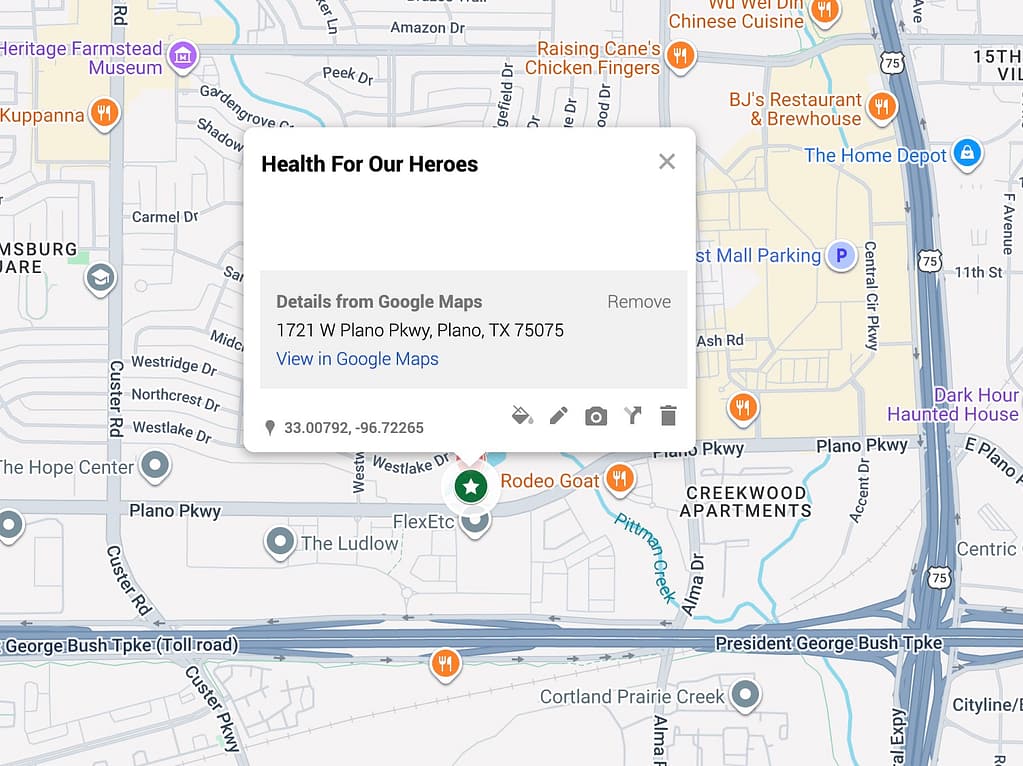
The participants will be receiving care at two locations in Plano, Texas, just north of Dallas. Most appointments will be in South Plano, near Plano Pkwy and Custer. Appointments with the doctor will be in West Plano, near Parker and the North Dallas Tollway.